Brake performance is critical for your vehicle’s safety. Over time, air or moisture can enter your brake lines, compromising braking efficiency and putting you at risk. That’s why knowing when to bleed your brakes is essential. In this article, we’ll highlight the top 5 warning signs and how to address them using professional tools like those offered by ACT TOOLS, a trusted manufacturer of automotive repair tools.
1. Spongy or Soft Brake Pedal Feel
What it means:
If your brake pedal feels soft or “spongy” when pressed, it often indicates air is trapped inside the hydraulic system. Air compresses under pressure, which reduces the responsiveness of the brake pedal.
How to fix it:
Bleed the brakes using a brake bleeding tool set to remove the air. This will restore firm, responsive pedal feedback. Be sure to start with the wheel farthest from the master cylinder (usually the rear passenger side).
2. Increased Stopping Distance
What it means:
Does it feel like your car is taking longer to come to a complete stop? This could be a sign that your brake system is not operating at full pressure due to air bubbles or contaminated fluid.
How to fix it:
Bleed your brake system to ensure the fluid is clean and free of bubbles. You may also want to inspect your brake pads and rotors while you're at it, but if those are fine, the issue is likely fluid-related.
3. Brake Pedal Sinks to the Floor
What it means:
If the pedal sinks slowly all the way to the floor under steady pressure, that can indicate air in the brake lines, a leak, or a worn master cylinder.
How to fix it:
Start by bleeding the system. If the issue persists after bleeding, have a mechanic check for fluid leaks or faulty brake components.
Pro Tip: After bleeding, always top off the brake fluid reservoir with the correct type (e.g., DOT 3, DOT 4, or DOT 5.1).
4. Visible Air Bubbles or Dark Fluid
What it means:
When you inspect the brake fluid during maintenance and see tiny bubbles, foam, or dark-colored fluid, it’s a strong indication of air contamination or degraded fluid.
How to fix it:
Use your brake bleeding kit to flush out the old fluid and replace it with fresh, clean brake fluid. Air bubbles should no longer be visible in the tubing once bleeding is complete.
5. Recent Brake Work or Fluid Replacement
What it means:
If you’ve recently had your brake lines, calipers, or master cylinder serviced—or if you topped up the brake fluid—air might have entered the system during the process.
How to fix it:
Any time the system is opened, you should bleed the brakes to ensure the hydraulic pressure is consistent across all wheels.
How to Fix It: Use the Right Brake Bleeding Tool
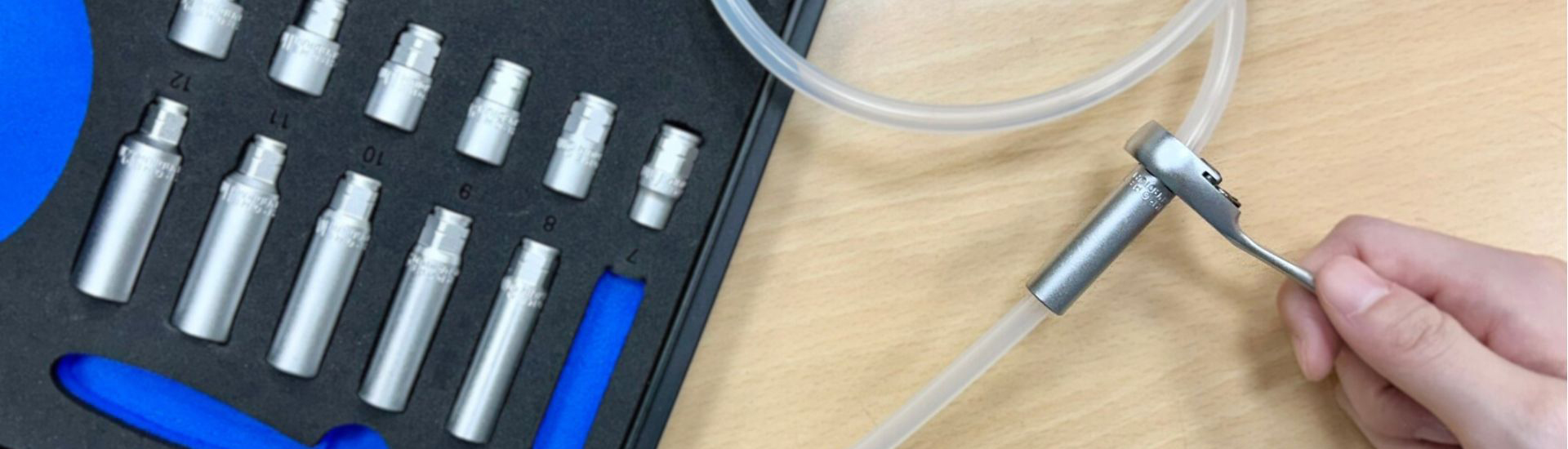
Proper bleeding requires the right tools. At ACT TOOLS, we offer two professional-grade brake bleeding tool sets to suit different technician needs:
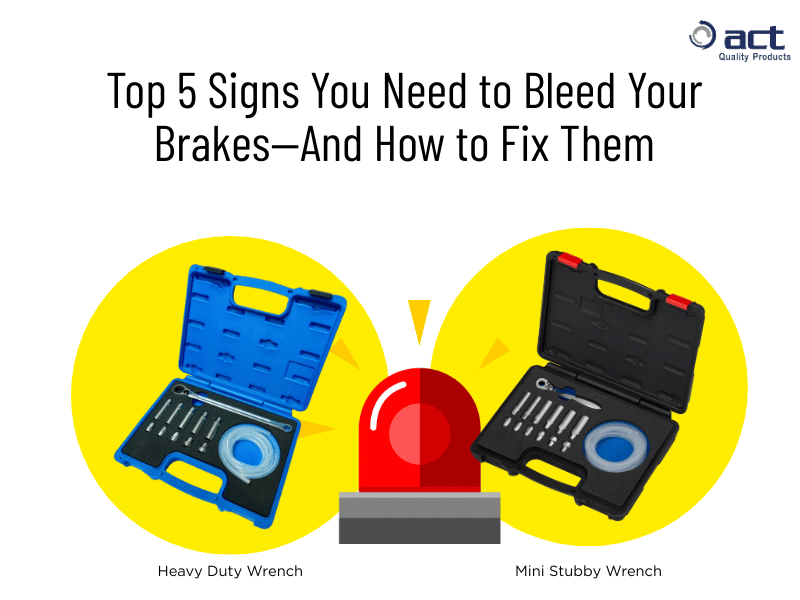
- 14PCS Brake Bleeding Tool Set (MINI Stubby Wrench): Compact and ideal for tight spaces, perfect for smaller vehicles and motorcycles.
- 12PCS Brake Bleeding Tool Set (Heavy Duty Wrench): Built for durability and frequent use, suitable for trucks, SUVs, and heavy-duty applications.
Both kits are designed to provide a secure fit on bleeder screws, minimize fluid spillage, and ensure efficient brake maintenance.
Why Choose ACT TOOLS?
With over 30 years of manufacturing experience, ACT TOOLS is a professional supplier of automotive repair tools, especially specializing in brake line wrenches and bleeder kits. We are trusted by professionals worldwide for our quality, innovation, and reliability.
FAQ
Q1: How often should I bleed my brakes?
Generally, every 2 years or 20,000–30,000 km. However, it depends on driving habits and vehicle type.
Q2: Can I bleed brakes alone?
Yes, especially with a proper brake bleeding tool kit. Some tools are designed for single-person operation.
Q3: What type of brake fluid should I use?
Always follow your vehicle manufacturer's recommendations (DOT 3, 4, or 5.1).
Q4: How do I know if there’s air in my brake lines?
Spongy pedal feel, inconsistent braking, or noises during braking are all signs of air in the system.
Q5: Which ACT TOOLS kit should I choose?
Choose the Mini Stubby Wrench set for compact applications or the Heavy Duty Wrench set for larger vehicles.
Conclusion
Maintaining your brake system is essential for safety. If you notice any of the warning signs mentioned above, don’t wait—bleed your brakes using high-quality tools. ACT TOOLS provides versatile and durable brake bleeding kits to make the job easier and more reliable.
Need help choosing the right tool? Contact ACT TOOLS for expert assistance.